
Internal tools
Job sheets, rotas, stock and admin screens built around your process, replacing the spreadsheets that hold the business together.
Find out more about internal toolsWe replace spreadsheets, copy and paste and chasing with software built around how your team works. See a price range in a few minutes, free, then talk it through with the person who will lead your project.
Someone retypes the same details into three places. Customers ring to ask where things are. The numbers you need on a Monday live in someone's head.
We build the booking, quoting, job tracking, client portals and automations that take that work away, shaped around how you already run. You see the price before anything starts.
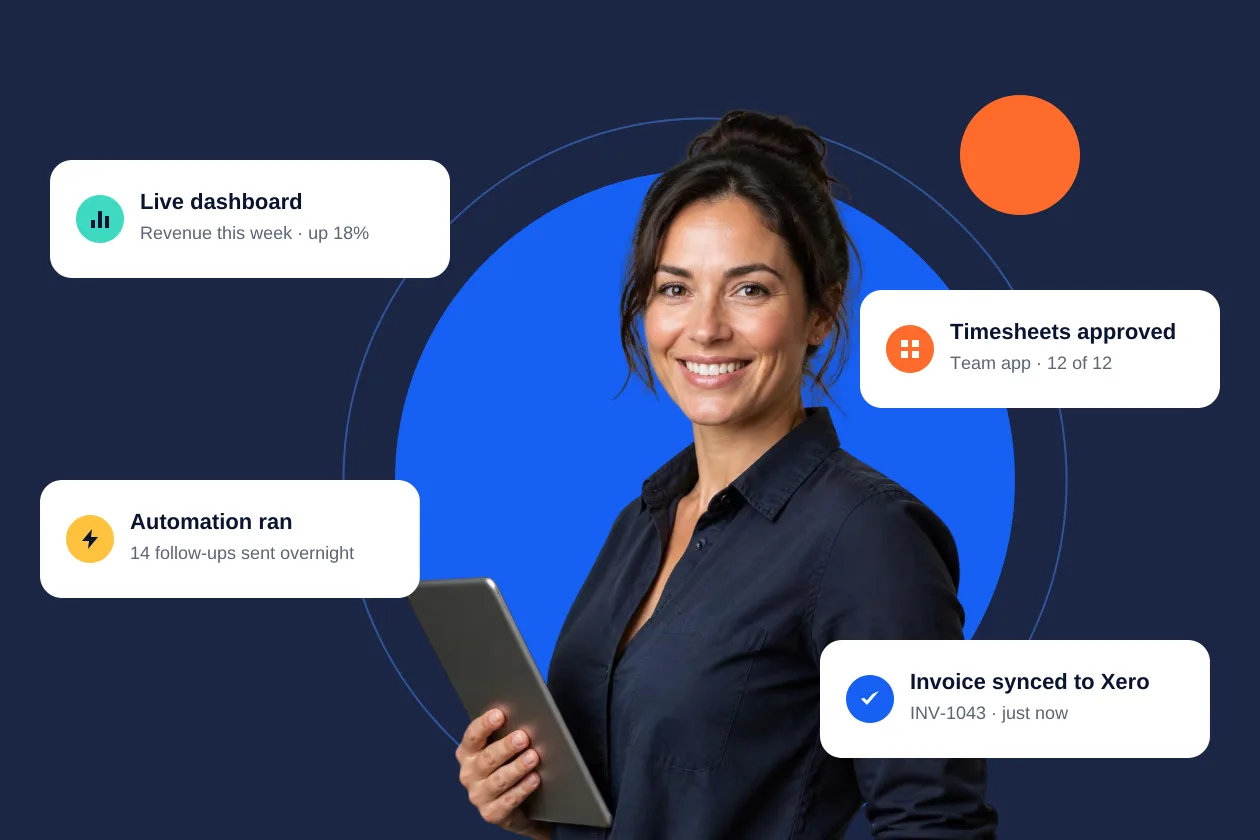
Software for the jobs that take time every week, each one shaped around how your business already works.
Job sheets, rotas, stock and admin screens built around your process, replacing the spreadsheets that hold the business together.
Find out more about internal toolsOnline booking, instant quotes and enquiry forms that collect the right details first time and land in one place.
Find out more about booking and quotingA private login where your customers see their jobs, documents, invoices and updates without chasing you.
Find out more about client portalsLive figures from the systems you already use, so you see what is happening without building a report by hand.
Find out more about dashboards and reportingConnect your tools so data moves on its own: invoices to Xero, enquiries to your CRM, reminders to your team.
Find out more about automations and integrationsFast, accessible websites that explain what you do clearly and turn visitors into enquiries.
Find out more about websitesFour steps, in order. A named lead stays with you throughout, so you always know who is responsible and what happens next.
Get an estimate in a few minutes, then a free 20-minute call about the problem, who does the work today and what a good result looks like. No obligation to go further.
What we will build, what is left out, what we need from you and how we will both know it is finished. The price and timeline are confirmed here, before any work starts.
You see working software as it takes shape, not just at the end, so you can steer early while changes are still small.
We put it live and walk your team through it. Then we either run it for you or hand everything over: your choice, set out below.
See what your project would cost, in a few minutes.
Freetakes a few minutes
Find the one fix worth paying for.
Free20-minute call
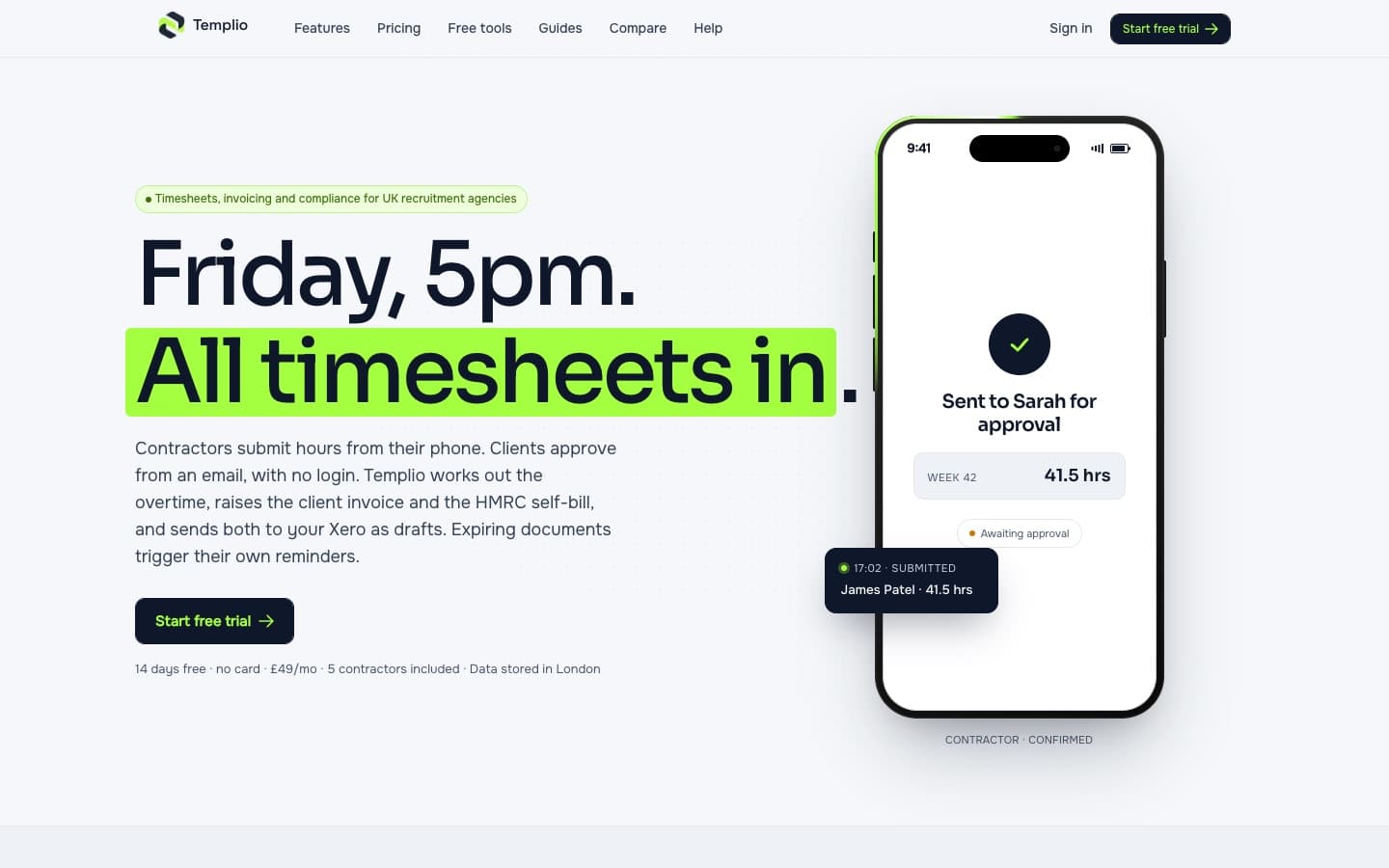
Timesheets, client invoices and HMRC self-bills for UK recruitment agencies, synced to Xero.
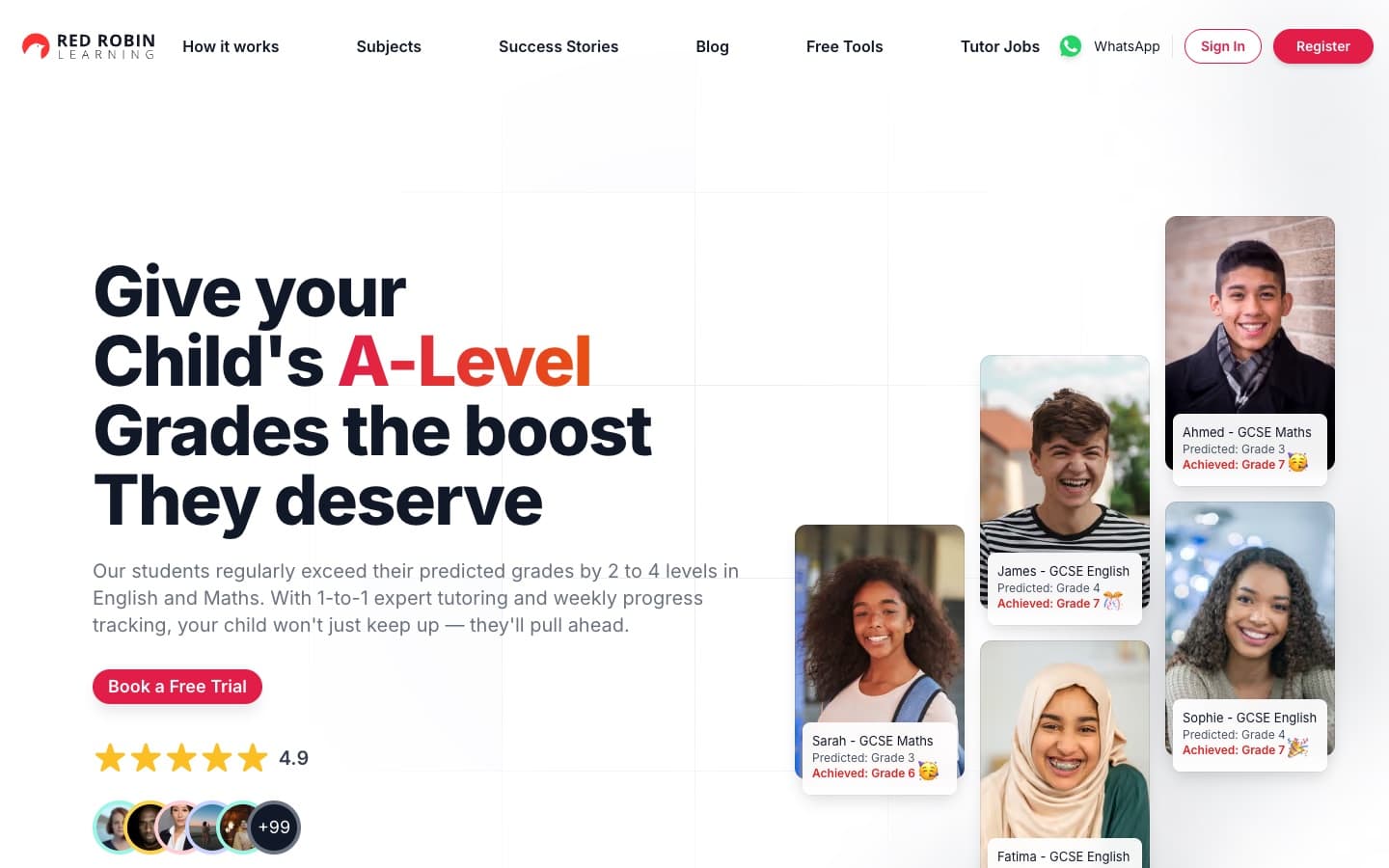
Online GCSE, 11+ and A-Level tutoring, from free trial to weekly progress reports.
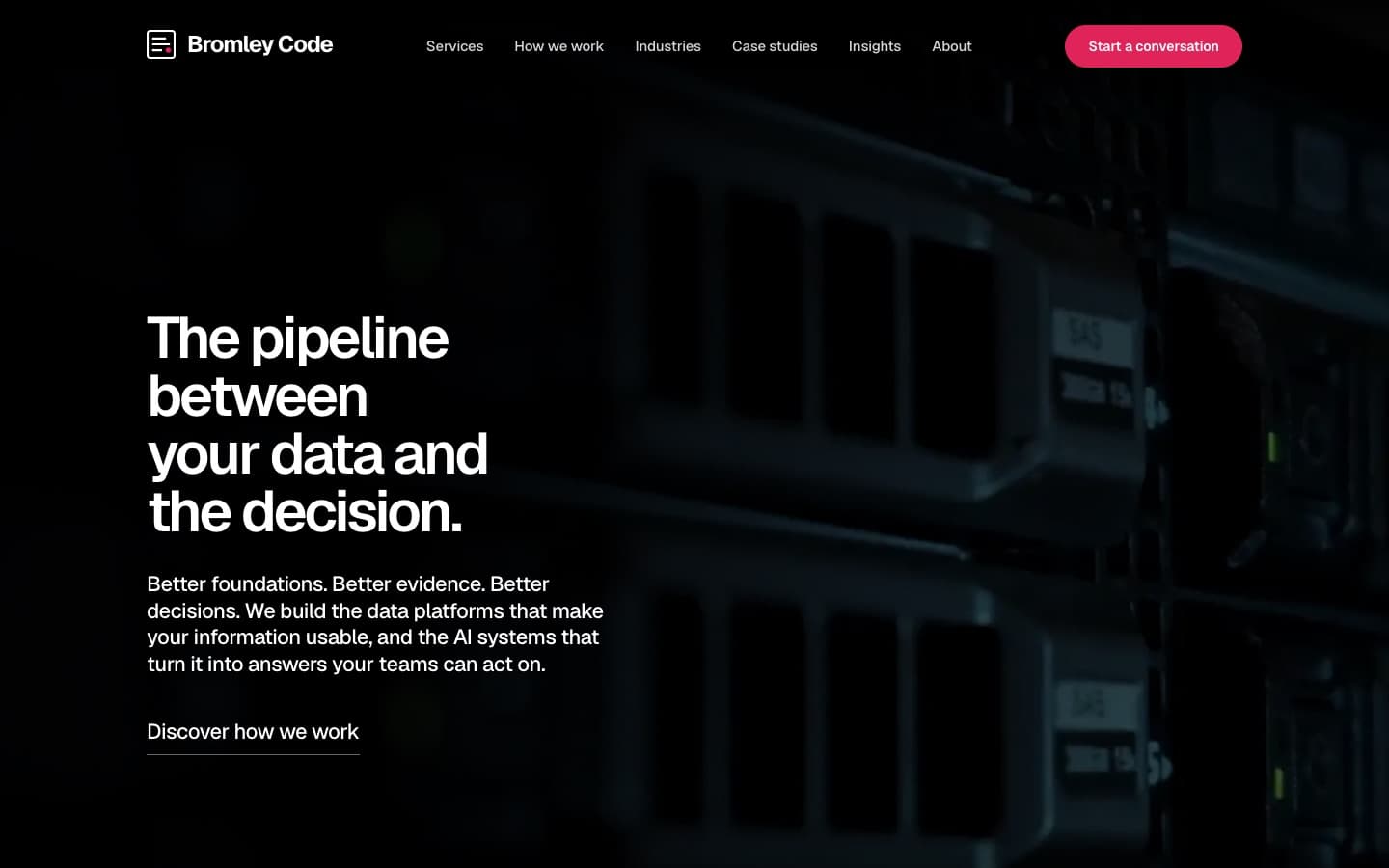
A credible brand site for a data and AI consultancy selling to technical buyers.
What you can expect on every project.
One person owns your project from the first call to launch, and they are the one you speak to.
You see what is included, what is not and what it costs before any work starts.
Your data is always yours. Take a full handover of the code, or let us run it for you.
Built on widely used technology, so any good developer can pick it up later.
New software is only useful if it talks to the systems your business runs on. We connect to them through their official APIs.
Product names are shown for compatibility only. Vectisflow is not a partner of these companies.
It depends on what you need. The project estimate gives you a price range in a few minutes, built from the work involved, and the written proposal confirms the exact price before anything starts.
Your estimate shows an expected timeline based on the work involved, and the proposal confirms it. Larger projects are planned in stages, so you see working software early.
Yes. Most people start with a problem, not a specification. Tell us what slows you down and we will suggest options on the call, including when a spreadsheet or an existing tool would do the job better.
Yes. Every project is scoped to the work, not to the size of the business, whether that is one team's workflow or a tool used across several sites.
Yes. We are based in London and work with businesses across the UK. Discovery calls and progress reviews happen on video, so location rarely matters.
Usually, yes. If a tool has an API we can connect to it, and we will tell you on the discovery call if something is not possible or not worth doing.
You choose: we host and look after it for a monthly fee, or we hand over the code, accounts and documentation. Your data is always yours either way.