Water & utilities · Intelligence extraction, 16 weeks
Making thirty years of asset documentation answerable at a UK water utility
A retrieval pipeline over 380,000 asset documents: drawings, condition reports, permits and handover packs, with permission inheritance preserved from the source document management system.
- Sector
- Water and utilities
- Scale
- UK regional water utility, ~4,500 staff
- Duration
- 16 weeks
Context
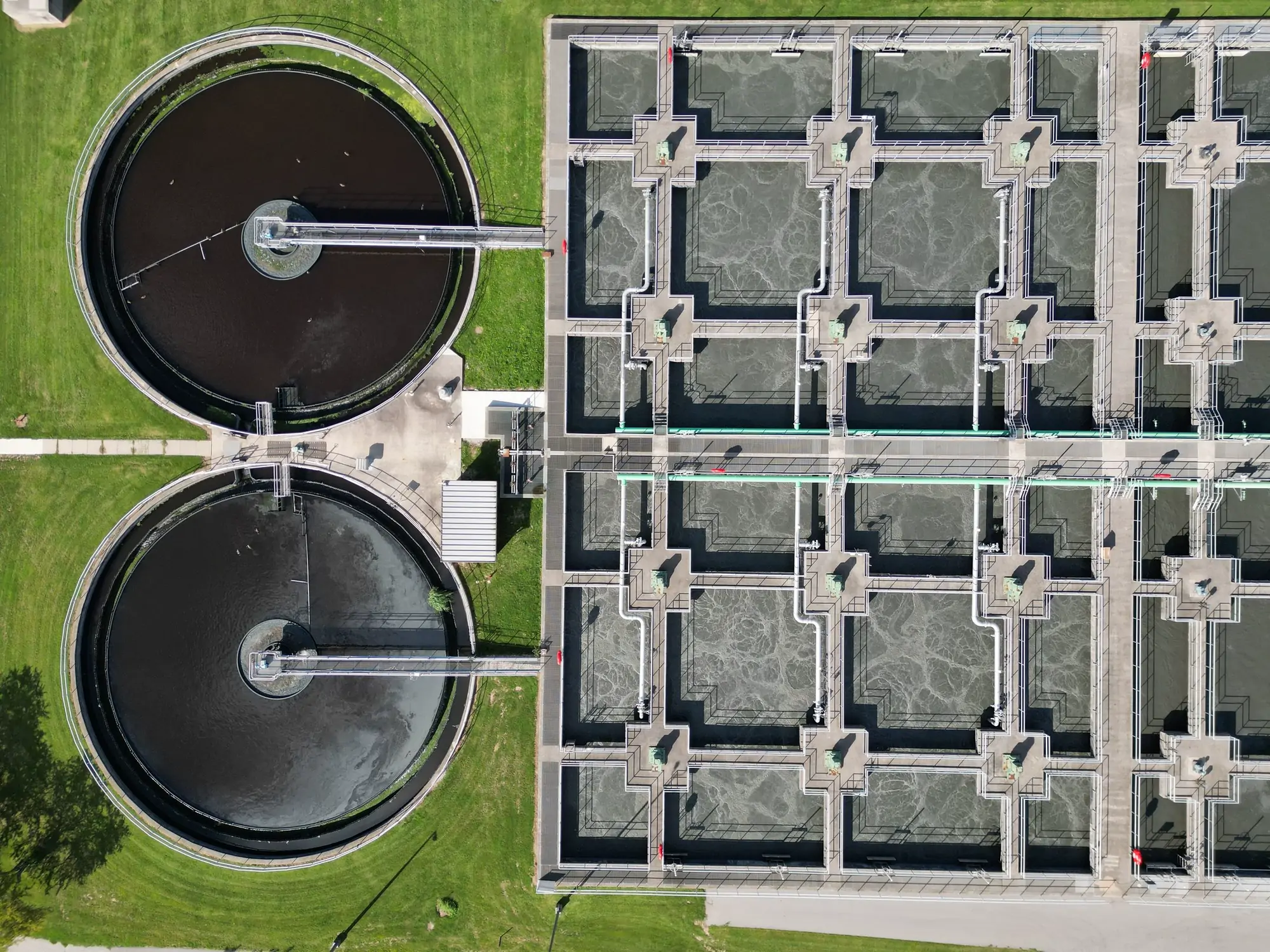
A regional water utility holds the documentary history of its network in a document management system accumulated over three decades and two mergers: as-built drawings, condition surveys, discharge permits, contractor handover packs, and the correspondence explaining why a given asset was built the way it was.
Field and planning engineers needed a specific class of answer from it, what is under this road, when was this asset last surveyed, which permit conditions apply to this discharge point, and were spending a meaningful share of each week not finding it.
The problem
The document management system had a search box. It matched filenames and whatever metadata had been typed at upload, which for pre-2011 material was frequently a site code and nothing else.
The practical consequence was escalation. An engineer who could not find a condition report within a few minutes raised a request with the asset information team, who searched more skilfully but no more automatically. That team had become a queue, and the queue had become the bottleneck on planning decisions.
The corpus itself was the harder problem. Roughly a third was scanned at inconsistent quality, some of it from microfiche. Drawings carried their meaning in title blocks and annotations rather than in prose. Superseded revisions sat alongside current ones with no consistent marker distinguishing them, and a wrong answer drawn from a superseded drawing is worse than no answer at all.
Why earlier approaches failed
An earlier enterprise search deployment indexed the text layer and returned document lists. It improved recall over filename search and changed nothing about the workload, because the work was never finding candidate documents: it was reading them to find the one paragraph that mattered.
A subsequent proof of concept put a language model over the same index. It answered fluently and was withdrawn within weeks: it cited superseded drawings without flagging them, and it could surface content from commercially restricted contractor packs to users who had no rights to the underlying documents. Both failures were architectural rather than incidental.
The pipeline we built
We rebuilt the retrieval path with revision state and access control as first-class stages rather than post-processing filters.
01Corpus survey
Three weeks sampling 2,400 documents stratified by era, source system and type. It established that four document families accounted for 78% of the questions being asked, which narrowed the parsing work substantially and pushed drawings: the hardest family, into a second phase with its own budget.
02Parsing and layout recovery
Native text extraction where the layer existed; OCR with a document-quality classifier routing poor scans to a higher-cost model. Condition reports are heavily tabular, so tables were extracted as structured records rather than flattened into prose, preserving the row-to-asset relationship that the answers depend on.
03Revision resolution
A dedicated stage inferring revision lineage from title-block metadata, document numbering conventions and issue dates, producing an explicit supersession graph. Retrieval defaults to current revisions; superseded content is retrievable only when a user asks a historical question, and is labelled as superseded in the response.
04Chunking
Structure-aware, on section and clause boundaries, with the parent document's title block and asset references attached to every chunk. Fixed 512-token windows were tested first and lost on recall by a wide margin, because they routinely severed a finding from the asset identifier that gave it meaning.
05Enrichment
Asset-identifier resolution against the asset register, so a chunk mentioning a site code, an alias and a legacy reference resolves to one asset. Date normalisation across seven observed formats. Document-type classification to allow filtering before ranking.
06Retrieval
Hybrid dense and BM25 retrieval over pgvector, with metadata pre-filtering on asset, document type and revision state, then cross-encoder reranking of the top 50. Pre-filtering carried more of the improvement than any embedding-model change tested.
07Permission inheritance
Source ACLs are indexed alongside each chunk and re-resolved per query against the directory, so the candidate set is filtered before ranking. A permissions regression suite runs synthetic users against known-restricted contractor packs on every release, and a failure blocks the release.
08Grounding and abstention
Answers cite the specific passage, document and revision. Where no retrieved passage supports a claim, the system returns what it did find and says the question is not answerable from the corpus, rather than generating a plausible sentence.
09Evaluation
310 questions collected from the asset information team's request queue, labelled with acceptable answers and supporting passages. Scored per document family and run as a CI gate.
What shipped
- A retrieval service inside the utility's Azure tenancy, integrated with the existing document management system and Entra ID.
- A query interface embedded in the planning tool engineers already use, rather than a separate destination.
- A permissions regression suite and a retrieval evaluation harness, both owned and run by the client's platform team.
- A review queue where an asset information specialist adjudicates flagged answers, with every adjudication written back to the evaluation set.
Outcomes
Each figure below carries the method behind it and the baseline it is measured against, which is the form a result has to take before it means anything.
- Time to a sourced answer
- Median time for an engineer to reach a cited passage, against a pre-engagement baseline drawn from timings in the request queue.
- 4 min 10 s → 38 s
- Requests escalated to the asset information team
- Weekly escalation volume, comparing the quarter before go-live with the quarter after general release.
- 312 → 96 per week
- Answer-supported rate
- Share of answers where the cited passage genuinely supports the claim, on the 310-question held-out set. Baseline is the earlier search-plus-model proof of concept.
- 71.6% → 94.2%
- Permission regressions reaching production
- Three were caught by the synthetic-user suite before release: two from a group-nesting change, one from a re-permissioned contractor folder that had not been re-indexed.
- 3 caught, 0 shipped
“The part that changed our minds was the abstention. The previous tool always had an answer, which meant we had to check every one of them, which meant it saved nobody any time. This one tells us when the corpus does not contain the answer, and that turned out to be the feature we trusted first.”
What next
Phase two extends parsing to as-built drawings, where the answer lives in the annotation layer rather than in prose, and pushes the same retrieval path into the field application used on site.
Services involved
- Intelligence extractionRetrieval, extraction and enrichment over the documents, tickets, contracts and transcripts that never reached the warehouse.
- Data & platform engineeringWarehouse and lakehouse build, migration, ingestion, modelling, and the contracts that keep the numbers trustworthy enough to act on.
More engagements

Central government
Assembling regulatory evidence from casework correspondence in central government
An extraction and evidence-assembly pipeline over eleven years of casework correspondence, built to a standard where every extracted fact traces to a source passage and a pipeline version.
UK central government agency, ~2,000 staff · 20 weeks
Read the engagement
Financial services
Putting a measured error rate behind claims-evidence retrieval at a specialist insurer
An evaluation harness, adversarial suite and assurance pack retrofitted to a retrieval system already in production, so the firm could state its error rate rather than describe its intentions.
UK specialist insurer, ~1,200 staff · 12 weeks
Read the engagement
Professional services
A two-year AI roadmap grounded in what the document estate could actually support
Fourteen candidate use cases screened against real corpora and against whether anyone could define a correct answer. Six survived; the sequence was chosen so the first delivery paid for the second.
Mid-market UK professional services firm, ~600 staff · 7 weeks
Read the engagement
Get in touch
Talk to us.
A first conversation runs about forty-five minutes and covers three things: what your estate actually looks like, whether anyone can define a correct answer or an agreed number, and whether your permission model resolves per user. Any one of them can rule the work out, and we would rather tell you in week one.
- Prefer email
- hello@vectisflow.com
- Response time
- One working day, from a person who has read it.