Professional services · Data and AI strategy, 7 weeks
A two-year AI roadmap grounded in what the document estate could actually support
Fourteen candidate use cases screened against real corpora and against whether anyone could define a correct answer. Six survived; the sequence was chosen so the first delivery paid for the second.
- Sector
- Professional services
- Scale
- Mid-market UK professional services firm, ~600 staff
- Duration
- 7 weeks

Context
A mid-market professional services firm had a board commitment to AI, a budget attached to it, and fourteen candidate use cases collected from practice leads.
What it did not have was any assessment of whether the underlying data could support them. The estimates in the list had been produced in a workshop, without anyone opening a document.
The problem
The firm's competitive knowledge sits in engagement files: reports, working papers, correspondence and precedent documents, held across a document management system, several practice-specific shares and, for older material, an archive nobody had opened in years.
Several candidates assumed a level of structure that did not exist. Others assumed access that partners would not grant. At least one assumed a definition of correctness that three interviewees defined three different ways.
The firm's real risk was not choosing the wrong first project. It was spending a year discovering, one project at a time, that its estate was not ready, and losing the board's appetite in the process.
Why earlier approaches failed
A previous strategy engagement had produced a value-versus-effort matrix. Effort had been estimated from the use-case description rather than from the data, and the two projects started on its recommendation both stalled on document quality within a quarter.
An internal proof of concept had worked well on a curated set of eighty documents. That set had been assembled by the person running the proof of concept, which made it a demonstration of the concept rather than a test of the estate.
The pipeline we built
Seven weeks, run jointly with the firm's technology and risk leads. The screening work is deliberately front-loaded: the point is to disqualify early and cheaply.
01Opportunity capture
Interviews with fee earners as well as practice leads. Two of the strongest candidates came from associates describing work they considered unremarkable, and had not appeared on the original list at all.
02Corpus sampling
Stratified samples from each repository, assessed for text quality, structural consistency, revision hygiene and duplication. The archive was 64% scanned with no reliable text layer, which removed two candidates outright and rescoped a third.
03Permission modelling
Mapping who can see what, and whether that model can be resolved per user at query time. Ethical walls in one practice could not be enforced by the document system's own API, which made a firm-wide precedent search undeployable until that is remediated. Better found in week three than in month nine.
04Evaluability screening
For each surviving candidate: what does correct look like, who adjudicates it, and can we assemble two to three hundred labelled examples? One high-enthusiasm candidate failed here: three senior people gave three incompatible definitions of a good output, and no system can be improved against a target that has not been agreed.
05Reference architecture
A target-state design sized to the firm's estate: ingestion, a shared retrieval layer, a shared evaluation harness, and per-use-case extraction schemas on top. The shared layers are what make the second delivery cheaper than the first.
06Sequencing and costing
Six surviving candidates ordered so that early work builds reusable capability. Build and run costs modelled per candidate, with the cost driver named, for two of them it was OCR volume, not inference.
What shipped
- A two-year sequenced roadmap with dependencies, decision points and explicit drop conditions per item.
- Feasibility findings for all fourteen candidates, including the eight recommended against and why.
- A reference architecture for a shared retrieval and evaluation layer.
- A costed and scoped first delivery, ready to start within three weeks of sign-off.
Outcomes
Each figure below carries the method behind it and the baseline it is measured against, which is the form a result has to take before it means anything.
- Candidates recommended against
- Disqualified on corpus quality, permission model or evaluability before any build budget was committed.
- 8 of 14
- Build budget released
- Allocated to the two candidates the firm had been closest to starting, both disqualified on corpus quality during week three.
- £410,000
- Time from sign-off to first delivery start
- Enabled by scoping and costing the first delivery during the roadmap rather than after it.
- 19 days
- Reusable layers identified
- Shared ingestion, retrieval and evaluation layers, each serving four of the six surviving candidates, which is what makes the second delivery cheaper than the first.
- 3 layers, 4 of 6 candidates
“The uncomfortable part was being told that eight of our fourteen ideas were not viable, and the useful part was being told in week four rather than after we had funded two of them. The finding about our ethical walls alone justified the engagement: we would have built something we could not have switched on.”
What next
The firm has begun the first delivery, precedent retrieval within a single practice where the permission model resolves cleanly, with the shared retrieval and evaluation layers built to serve the following three.
Services involved
- Data & AI strategyA sequenced plan grounded in what your data can actually support, with the disqualifying constraints found before the budget is committed.
- Evaluation & assuranceEvaluation harnesses, adversarial testing and data contracts, so both the answers and the numbers underneath them can be checked.
More engagements
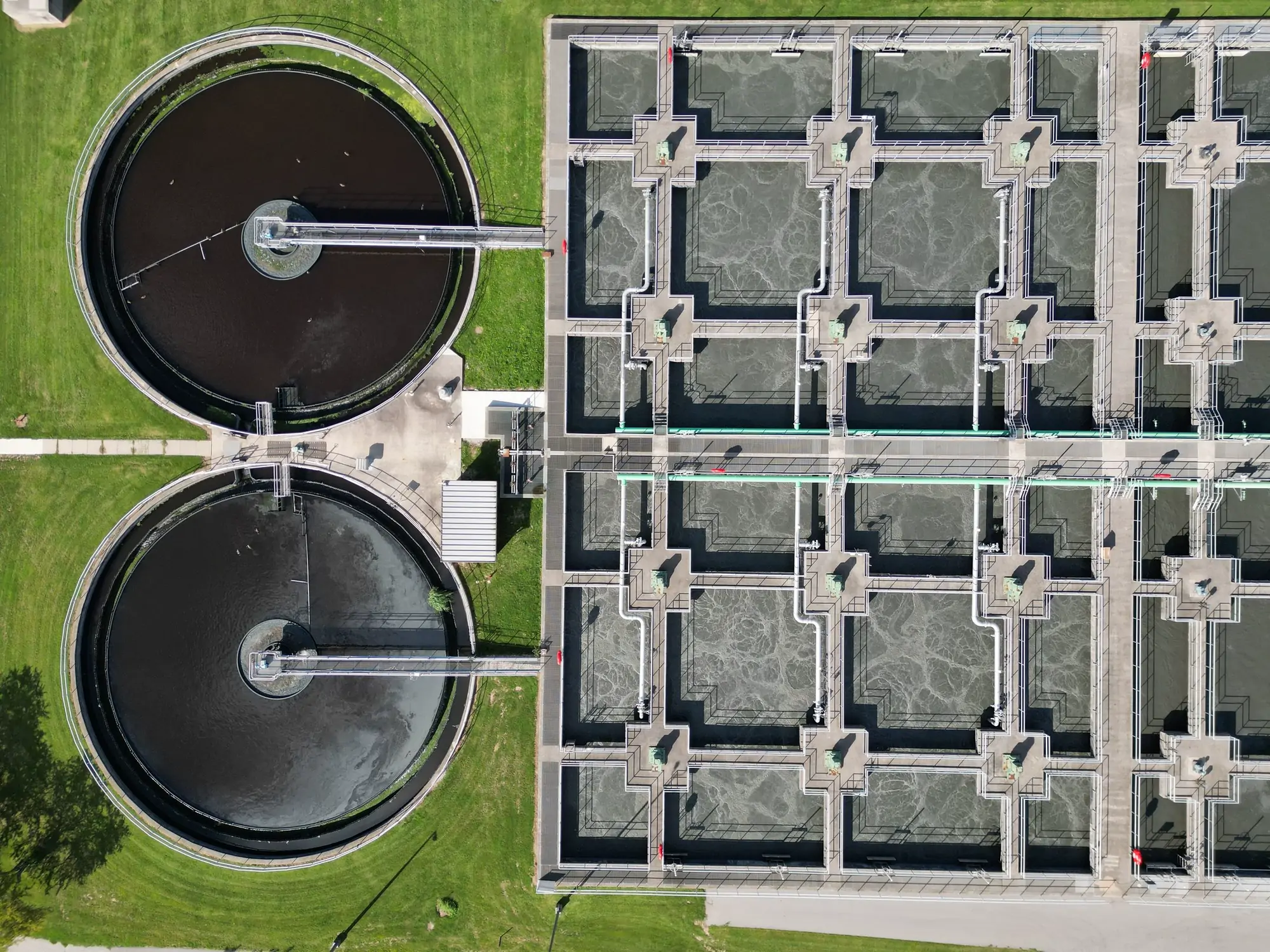
Water & utilities
Making thirty years of asset documentation answerable at a UK water utility
A retrieval pipeline over 380,000 asset documents: drawings, condition reports, permits and handover packs, with permission inheritance preserved from the source document management system.
UK regional water utility, ~4,500 staff · 16 weeks
Read the engagement
Central government
Assembling regulatory evidence from casework correspondence in central government
An extraction and evidence-assembly pipeline over eleven years of casework correspondence, built to a standard where every extracted fact traces to a source passage and a pipeline version.
UK central government agency, ~2,000 staff · 20 weeks
Read the engagement
Financial services
Putting a measured error rate behind claims-evidence retrieval at a specialist insurer
An evaluation harness, adversarial suite and assurance pack retrofitted to a retrieval system already in production, so the firm could state its error rate rather than describe its intentions.
UK specialist insurer, ~1,200 staff · 12 weeks
Read the engagement
Get in touch
Talk to us.
A first conversation runs about forty-five minutes and covers three things: what your estate actually looks like, whether anyone can define a correct answer or an agreed number, and whether your permission model resolves per user. Any one of them can rule the work out, and we would rather tell you in week one.
- Prefer email
- hello@vectisflow.com
- Response time
- One working day, from a person who has read it.